My interest in privacy didn’t start with some big “aha” moment. It just kind of grew over time.
I’ve been working as a frontend engineer for the past few years, mostly focused on accessibility compliance. My background in systems engineering and human factors shapes how I think about technology. I naturally look at it through the lens of how people actually experience it — does it help them, or does it subtly get in their way? This perspective started to shape how I thought about privacy too. I began to see that principles like consent, transparency, and control were just as important as usability.
I found myself noticing privacy issues in everyday life. Data breaches were no longer just something you read about in the news. They were happening to people around me, myself included. I started paying attention to how companies collect and use data, how little protection we actually have in the United States compared to places like Europe, and how often personal information gets mishandled or exposed. Privacy started to matter to me in a way it hadn’t before.
Around this same time, the tech industry was shifting. AI was starting to change how development work looked. On top of that, the rollback of DEI initiatives was cutting deeply into accessibility roles, which was the area I had been working in. It became pretty clear the market was narrowing and I needed to start thinking about what came next.
So, I took a step back and thought about all the skills I had accumulated over the years. My human factors background helped me understand how people interact with technology. Accessibility compliance meant working with regulations, audits, and policy frameworks. Frontend development gave me a practical understanding of how systems are actually built, including the privacy considerations I also had to address. When I looked at it this way, moving toward privacy work started to make a lot of sense.
I began looking into graduate programs and came across Albany Law School’s MS in Cybersecurity and Data Privacy. The program caught my eye because of the mix of law and technical coursework, and it is well recognized in the privacy community. Albany Law is also a participating school in the Westin Scholar program, which recognizes students for excellence in privacy. It’s fully online too, which makes it possible for me to continue working while studying.
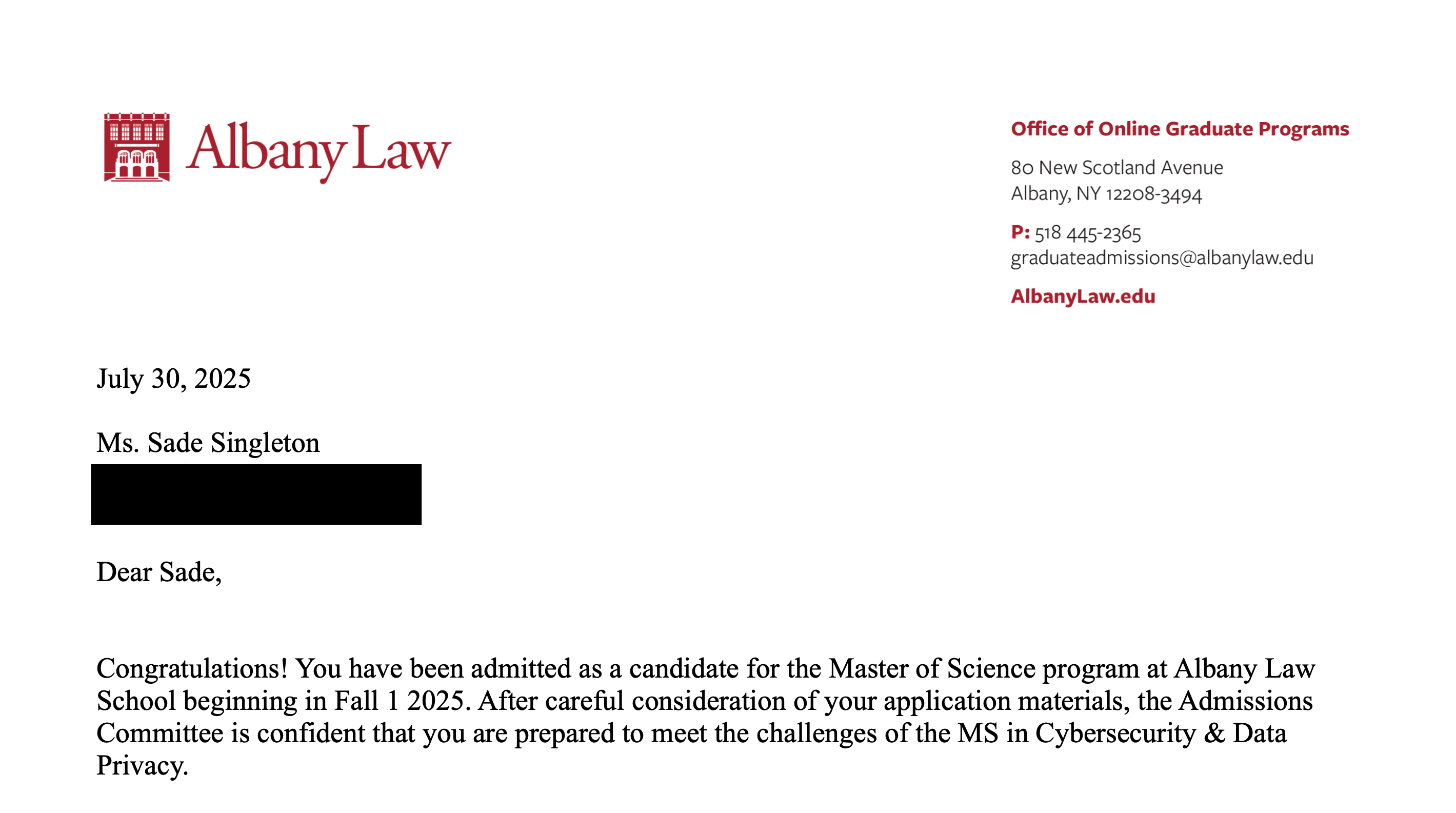
It felt like the right fit, so I applied, was accepted, and am now a few weeks into my first semester.
I already have one master’s degree, so going back to school was definitely not part of my long-term plan. But the more I learn, the more it feels like the right decision.
What draws me to privacy is how it blends technology, law, and ethics. I want to understand how AI is shaping the way data is used, how different countries approach privacy regulation and what it takes to design systems that protect people’s information instead of collecting as much as possible.
Looking back, the twists and turns in my career have brought me to a place that surprisingly feels aligned. I’m not exactly sure where this path leads yet, but I am excited to be on it.